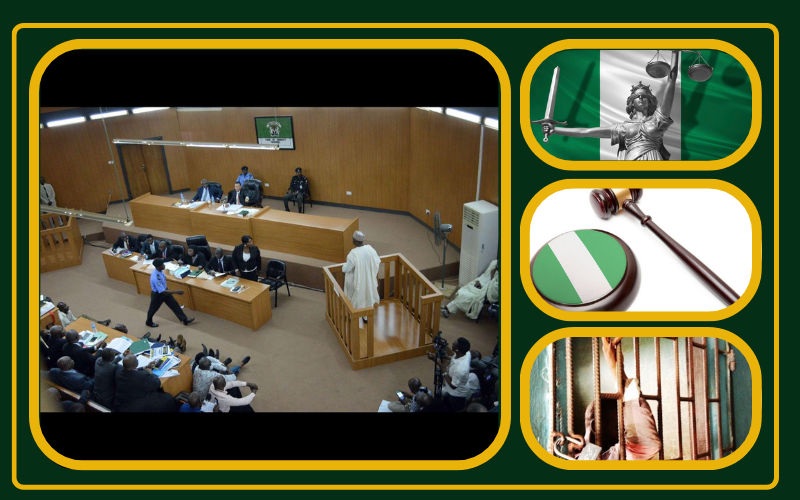
One Law, Two Realities — How Justice Protects the Powerful and Punishes the Poor
Personal stories from victims, families, and communities silenced by injustice.
Justice is meant to be blind. In Nigeria, it often sees clearly and it sees class, power, and privilege.
From police stations to courtrooms, the experience of the law is sharply divided. For the wealthy and well-connected, the justice system is navigable, negotiable, and forgiving. For the poor, it is rigid, punishing, and often merciless even in the absence of guilt.
This is not a failure of law alone. It is a failure of how the law is applied.
One Legal System, Unequal Consequences
Nigeria operates under a single legal framework administered by the Nigerian Judiciary. On paper, all citizens are equal before the law.
In reality, outcomes often depend on:
•Access to skilled legal representation
•Ability to pay bail or fines
•Political or social connections
•Visibility and influence
Those without these protections face a harsher version of justice.
Poverty as an Unwritten Offence
For many poor Nigerians, contact with the justice system begins not with a crimebut with suspicion.
Common patterns include:
•Arrests based on appearance or location
•Detention without charge
•Inability to meet bail conditions
•Long pre-trial incarceration
A person may spend months or years in detention for minor offences or for crimes they did not commit simply because they cannot afford bail or a lawyer.
By contrast, affluent suspects often:
•Secure bail within hours
•Are charged to court only after negotiations
•Remain free throughout trial
Justice, in effect, is priced.
Policing the Poor, Protecting the Powerful
Law enforcement agencies, including the Nigeria Police Force, exercise broad discretionary powers. These powers are rarely neutral.
Poor communities experience:
•Aggressive policing
•Arbitrary arrests
•Limited access to legal counsel
Meanwhile, allegations against powerful individuals frequently stall at the investigation stage or are quietly dropped.
This selective enforcement creates a perception and reality of two categories of citizens.
When Innocence Is Not Enough
In Nigeria, innocence does not guarantee freedom. Many detainees remain in custody not because evidence exists against them, but because procedural hurdles cannot be crossed without money.
For families, the cost is devastating:
•Breadwinners disappear into detention
•Children drop out of school
•Communities absorb long-term trauma
The law speaks, but it does not listen.
The Silence That Follows
Most of these cases never make headlines. They unfold quietly in police cells, magistrate courts, and overcrowded correctional facilities.
Without influence or resources, victims and their families are left unheard as echoes without amplification.
This silence is not accidental. It is structural.