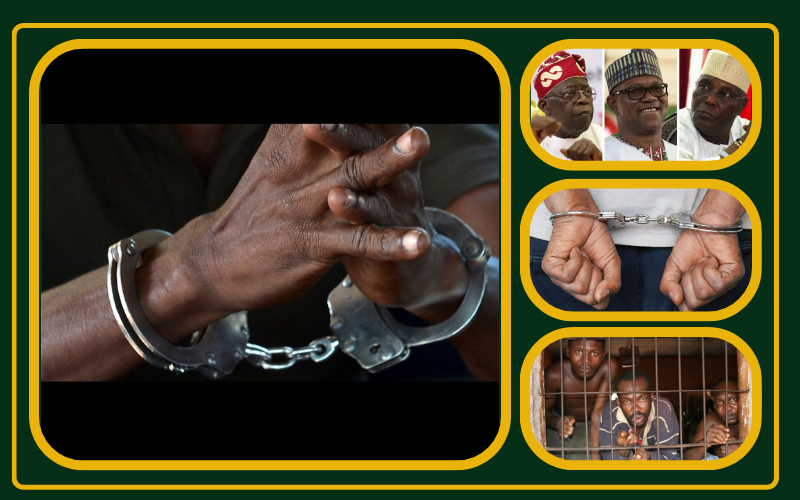
How Power Escapes Accountability and Inequality Becomes Law
When enforcement is selective, injustice becomes systemic.
Inequality before the law is not sustained by a single actor. It is maintained through delay, discretion, and immunity.
How the Powerful Avoid Consequence
For the privileged, the justice system offers escape routes:
•Endless adjournments
•Strategic injunctions
•Procedural loopholes
•Weak or stalled prosecutions
Cases involving influential figures often stretch for years until:
•Evidence grows stale
•Public attention fades
•Witnesses disappear
Accountability dissolves through exhaustion.
Bail, Fines, and Freedom
Bail conditions that are routine for the wealthy can be impossible for the poor. Monetary bail turns liberty into a commodity.
The result:
•The rich await trial at home
•The poor await trial in custody
Pre-trial detention becomes a punishment reserved for poverty.
Enforcement Without Equality
Even when courts rule in favor of ordinary citizens, enforcement is uncertain. Orders against powerful individuals or institutions are often ignored or delayed.
For the poor, however, enforcement is swift and unforgiving.
This imbalance teaches a dangerous lesson:
the law is strict only downward.
Communities Trapped in the Cycle
When injustice is predictable, communities adapt not by trusting the law, but by fearing it.
People learn:
•Avoid the police, even when victimized
•Settle disputes informally
•Accept injustice as normal
This erodes faith in the justice system and weakens social cohesion.
Why These Stories Matter
Legal inequality is not abstract. It is lived daily by:
•Families waiting outside police stations
•Mothers visiting detention centers
•Children growing up without parents
These are not isolated failures. They are patterns.
Reclaiming the Meaning of Justice
Justice cannot belong only to those who can afford it. A legal system that punishes the poor and protects the powerful does not merely fail it betrays its purpose.
Platforms like Cry for Justice Nigeria exist to document what is often ignored:
the human cost of unequal Justice.
When the law listens only to power, the voiceless do not disappear they echo, waiting to be heard.